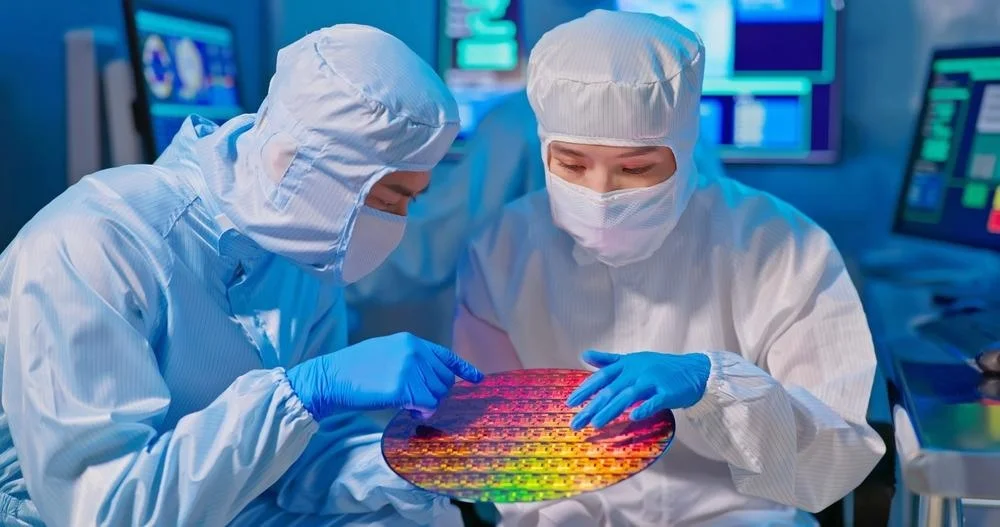
For much of the semiconductor industry’s history, progress has been measured by how small we could make things. Transistor sizes shrank predictably, chips became denser, and Moore’s Law reigned supreme. But today, that path is less clear. As scaling becomes more difficult, attention has turned to less celebrated elements of chip manufacturing. One of the most vital of these is photoresist chemistry. Erik Hosler, a strategist who bridges semiconductor trends with systemic development, recognizes that the road forward will depend on more than just shrinking features.
In fact, the very material that enables patterns to form on silicon is undergoing a renaissance. Photoresists, once seen as mere supporting players in the lithography process, are now a key area of innovation. From new molecular designs to finely tuned sensitivities, modern photoresists are being engineered to meet the demands of next-generation lithography. This transformation is not only technical. It reflects a shift in how the industry views the chemical foundations of chipmaking as essential levers for extending performance.
A Crucial Yet Overlooked Material
Photoresists are light-sensitive materials applied to silicon wafers during photolithography. When exposed to light, they change their chemical structure, either hardening or softening depending on the type. This selective reaction allows precise etching of patterns that define transistors, interconnects, and other microstructures.
For decades, improvements in photoresist materials were incremental. Engineers focused more on optics and exposure systems, if resists would keep up. But as feature sizes dropped below 10 nanometers, it became clear that resist chemistry would need a dramatic overhaul.
With fewer photons available in Extreme Ultraviolet (EUV) systems, photoresists began facing significant challenges. Line-edge roughness increased, resolution dropped, and stochastics, random chemical variations, led to defects that were hard to predict or control. These issues made the resist’s role more critical than ever.
Engineering at the Molecular Level
To meet these new challenges, chemists are developing new classes of photoresists with precisely engineered molecular structures. The goal is to improve photon absorption, minimize random variability, and allow tighter process control during exposure and development.
One focus area is high-sensitivity resists. These materials are designed to work efficiently with fewer photons, which is especially important for EUV lithography, where light intensity is limited. Lower dose requirements also help reduce tool time and improve throughput, both of which are vital for commercial viability.
Another major effort involves reducing stochastic defects. By understanding the behavior of resist molecules during exposure and reaction, researchers can design formulations that are more predictable and uniform. It helps reduce the variability in final pattern edges and boosts the overall manufacturing yield.
A Platform for Process Control
Modern photoresists are no longer passive materials. They are becoming active participants in process optimization. Researchers are now exploring resists that provide real-time feedback or self-adjust based on exposure conditions. Some experimental systems use chemically amplified mechanisms that offer higher control and sensitivity.
Resist chemistry is also being tailored for specific applications. For example, certain resists are optimized for patterning dense lines, while others are engineered for via holes or irregular shapes. This level of specificity allows fabs to fine-tune results depending on the layer being fabricated.
Erik Hosler observes, “It’s going to involve innovation across multiple different sectors.” This statement rings especially true in the context of photoresists. Success requires the integration of materials science, photonics, metrology, and computational modeling. Chemists, optical engineers, tool manufacturers, and process technicians must work together to design materials that match the developing complexity of lithographic systems.
Challenges Beyond Chemistry
While chemistry is advancing quickly, integrating new resists into high-volume manufacturing remains a complex process. These materials must be compatible with existing toolsets and process flows. They must also maintain stability under thermal and plasma conditions used in etching and deposition.
Manufacturers rely on extensive testing and metrology to validate new resists. Parameters like sensitivity, resolution, line-edge roughness, and etch resistance must all meet strict standards. New defects or interactions often arise that are not seen in simpler process environments.
It is where computational simulation and AI come into play. By simulating chemical reactions at the molecular level and predicting behavior across different exposure conditions, engineers can screen and optimize new resists faster and more accurately.
The Role of Suppliers and Partnerships
Given the specialized nature of resist development, materials suppliers play a critical role. Companies like FUJIFILM, JSR, and Shin-Etsu Chemical are leading the charge in bringing next-generation resists to market. Their work goes beyond chemistry. It includes building testing platforms, collaborating with lithography toolmakers, and aligning development timelines with foundry roadmaps.
These partnerships are becoming more important as the industry moves toward innovative approaches like high-NA EUV and multicolor lithography. Resists must now respond to different exposure types and offer broader process windows to accommodate complex patterning strategies.
Close collaboration also ensures that material development is aligned with downstream processing. It reduces the risk of last-minute redesigns or incompatibilities and accelerates the path from lab formulation to fabrication implementation.
Beyond Pattern Transfer
Looking ahead, photoresist innovation could support entirely novel approaches to chip design and fabrication. There is interest in resists that incorporate additional functionality, such as self-assembly, real-time metrology integration, or environmental adaptability.
Some researchers are exploring hybrid materials that combine resist properties with masks or dielectric layers. Others are investigating bio-inspired materials that mimic self-organizing structures found in nature. These approaches aim to reduce complexity while enabling more efficient and adaptable fabrication processes.
The goal is to move beyond simple pattern transfer toward a more intelligent and interactive lithography process. In this future, resistors will not just respond to light. They will help guide it.
Chemistry as a Catalyst
The revival of photoresist chemistry marks a turning point in semiconductor manufacturing. What was once a quiet corner of fabrication is now a front line of innovation. As process scaling becomes more multidimensional, the materials at the core of patterning must develop in lockstep.
By rethinking photoresists as smart, adaptable platforms, the industry is unlocking new possibilities for precision, efficiency, and scalability. And in doing so, it is proving that progress is not limited to optics or design. It can also come from a beaker.
Through collaboration and experimentation, photoresist chemistry is becoming a bridge to the next era of chipmaking. It is no longer about masking patterns. It is about enabling miracles, one molecule at a time.
