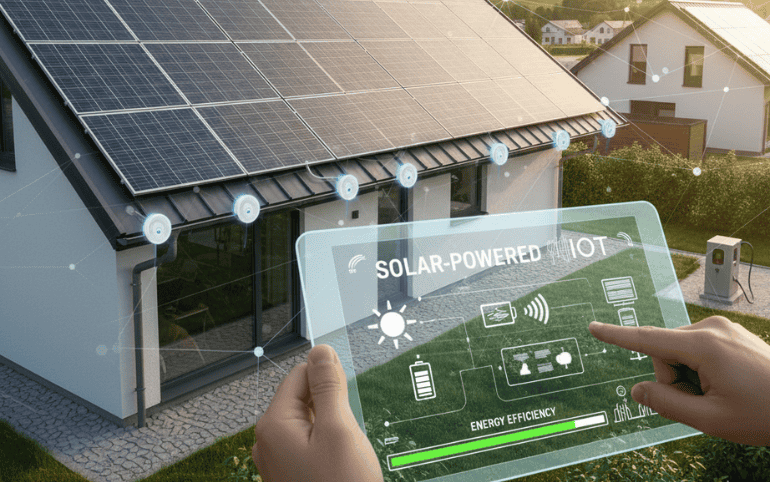
Homes today generate more data than ever before. Sensors track temperature, motion, lighting levels, and appliance activity, feeding information into platforms designed to respond in real time. Energy management is increasingly discussed within this connected environment. As one of the nation’s largest residential solar providers, Freedom Forever Solar operates in a market where solar systems are often paired with monitoring tools and digital dashboards that provide greater visibility into production and usage. In this broader context, solar is evolving from a static source of power into a more interactive part of the home’s overall energy picture.
Internet of Things (IoT) devices can add context to home energy use. Sensors and connected appliances may reveal when rooms are occupied and where demand is coming from. With that added visibility, some energy management platforms are designed to make incremental adjustments during the day rather than relying entirely on fixed schedules. In theory, this can help keep energy use more balanced without requiring constant manual input from the household.
The Mechanics of a Feedback Loop
A feedback loop depends on continuous information flow. In a solar-powered home, production data from panels feeds into monitoring platforms while usage data flows in from connected devices.
The platform compares these inputs and responds accordingly. When production rises, systems register available energy. When consumption increases, sensors reflect that demand. Adjustments follow in real time. Unlike static programming, feedback loops support responsiveness. Homes react to current conditions rather than preset assumptions. Energy management becomes adaptive and contextual rather than fixed.
Sensors Turn Homes into Data Sources
Sensors form the foundation of IoT-based energy management. Temperature sensors guide climate systems. Motion sensors reflect occupancy, and smart meters track usage with greater precision.
In solar-powered homes, these data points explain not just how much energy is used, but why. Increased usage may reflect occupied spaces. Reduced demand may coincide with empty rooms or natural light. Sensors transform everyday activity into actionable insight. Systems respond based on real behavior rather than estimates, supporting more accurate coordination across the home.
Connected Appliances Add Precision
Connected appliances play a key role in energy feedback loops. Washers, dryers, dishwashers, and water heaters report status and energy use in real time.
This information allows platforms to align appliance operation with solar production. When output is high, appliances can run using locally generated energy. When production slows, nonessential tasks may pause or shift. These adjustments occur automatically. Precision matters. Knowing which devices are active and how much energy they consume supports smoother balancing across household systems.
Balancing Production and Consumption
Solar production changes throughout the day based on weather and daylight. Household consumption varies with routines and occupancy.
IoT platforms bridge this gap by continuously comparing supply and demand. When sensors detect increased production, systems support additional usage. When demand rises unexpectedly, priorities adjust. Small, continuous adjustments create smoother outcomes than large, infrequent changes. This steady balancing reduces strain and improves overall efficiency without disrupting daily life.
Learning Through Continuous Adjustment
Feedback loops improve over time. As connected systems operate, they gather more data about household behavior.
Patterns emerge naturally through observation. Platforms refine responses as they learn which adjustments produce consistent results. Energy management feels smoother as system behavior aligns more closely with how residents live. Continuous adjustment supports long-term efficiency. Homes respond naturally rather than rigidly, guided by data collected through everyday activity.
Visibility Builds Trust in Connected Systems
Connected systems tend to feel more approachable when homeowners can see what the home is doing and what may have prompted a change. A clear dashboard or app can make automation easier to understand rather than mysterious. Instead of guessing why a battery discharged or why a device shifted its cycle, homeowners may be able to review production, usage, and storage activity in one place and form a clearer picture of what is happening.
That visibility can also make coordination across devices feel more transparent. Homeowners might notice when higher solar output aligns with increased device activity, or when stored power appears to cover demand later in the day. In online discussions, including Freedom Forever reviews, homeowners often emphasize the value of clear communication and access to monitoring tools when describing their experience. When system information is presented in a way that is easy to follow, automation can feel more practical, and confidence may build gradually over time.
Reducing Waste Through Coordination
IoT-driven feedback loops help reduce waste by coordinating devices rather than allowing them to operate independently. Excess production can support active systems instead of being lost. Demand spikes can be managed before drawing heavily from external sources.
Climate systems adjust based on occupancy. Lighting responds to presence. Appliances operate with awareness of available energy. These coordinated responses reduce unnecessary consumption and support intentional energy flow throughout the home.
Supporting Comfort Without Complexity
Efficiency matters, but comfort remains central to household satisfaction. IoT platforms balance these priorities through subtle, well-timed adjustments. Temperature, lighting, and power usage can adapt without disrupting daily routines. These refinements maintain a comfortable living environment while reducing unnecessary energy use. The result is a system that feels responsive rather than restrictive.
Lighting changes gradually. Climate systems respond smoothly to occupancy patterns. Feedback loops operate quietly in the background, supporting daily routines without drawing attention. Homes remain comfortable while using energy more thoughtfully. Systems that respect comfort tend to remain trusted and engaged over time.
Planning Benefits from Connected Insight
Connected devices also support long-term planning. Historical data show how energy use changes across seasons, routines, and life stages. These insights help homeowners anticipate future needs rather than react to short-term fluctuations. Planning for system expansion, storage upgrades, or efficiency improvements becomes more informed. Over time, connected data supports decisions that align energy systems with changing household priorities.
This insight helps households consider upgrades, storage additions, or new appliances with greater confidence. Planning reflects observed behavior rather than assumptions. IoT data provides context that supports thoughtful growth of the home energy system over time.
A Smarter Way to Balance Power
Connected devices have reshaped how solar-powered homes manage energy. Sensors and appliances feed real-time data into monitoring platforms, creating feedback loops that balance production and consumption continuously.
This approach supports efficiency, comfort, and clarity. Homes operate as coordinated systems rather than collections of independent devices. As IoT technology continues to spread, solar benefits from deeper integration with connected devices. Feedback loops support homes that treat energy as an active, managed resource shaped by data and daily life.
