Introduction: The Unseen Pulse of Progress
From the moment we silence an alarm clock at dawn to the late-night scroll through our smartphones, electronics weave themselves into every thread of modern life. Their presence is so ubiquitous, so seamlessly integrated into our routines, that we often forget the sheer genius that hums beneath the sleek glass screens, circuit boards, and blinking LEDs. Electronics are not merely gadgets — they are the silent force powering global connectivity, industry, entertainment, and scientific advancement.
The Essence of Electronics: Small Parts, Big Impact
At its heart, electronics is the science and craft of controlling electrical energy to perform useful tasks. While electricity itself is as old as the lightning that struck ancient forests, it was the manipulation of tiny currents through circuits that unlocked an age of boundless possibility.
Every electronic device — whether it’s a television, a fitness tracker, or a self-driving car — relies on a few fundamental components:
-
Resistors and Capacitors: Regulate the flow and storage of electrical charge.
-
Diodes and Transistors: Control the direction and amplification of current, forming the backbone of modern computing.
-
Integrated Circuits (ICs): Miniature marvels that pack thousands or millions of transistors onto a single chip.
These unassuming components, arranged in precise harmony, transform raw electricity into everything from life-saving medical diagnostics to immersive entertainment.
A Brief History: From Vacuum Tubes to Silicon Dreams
The story of electronics is one of relentless miniaturisation and innovation. In the early 20th century, electronics meant vacuum tubes — bulky, fragile glass cylinders that amplified signals and powered early radios and televisions.
Then came the transistor in 1947, a breakthrough that rewrote the rulebook. Smaller, more reliable, and more energy-efficient, transistors paved the way for the integrated circuit in the 1950s. Suddenly, engineers could fit vast computational power into ever-smaller devices.
The birth of the microprocessor in the 1970s ignited the personal computing revolution. Silicon chips shrank computers from room-filling giants to devices that could sit on a desk — and later, in our pockets. Moore’s Law, the observation that the number of transistors on a chip doubles roughly every two years, drove exponential growth for decades.
Electronics in Everyday Life: The Quiet Companion
It’s astonishing to consider how deeply electronics shape our daily lives, often invisibly.
-
Communication: Smartphones, laptops, and network routers are feats of electronic engineering, shrinking the world into a global village.
-
Entertainment: Televisions, gaming consoles, and streaming devices transform living rooms into theatres.
-
Healthcare: Diagnostic imaging, wearable monitors, and robotic surgical tools save lives daily.
-
Transport: From advanced driver-assistance systems in cars to avionics in aircraft, electronics ensure safety and efficiency.
-
Smart Homes: Thermostats that learn our routines, voice assistants that dim the lights, and smart appliances that conserve energy — all powered by electronics.
Each small convenience is a testament to the ceaseless evolution of circuitry and semiconductors.
The Age of Smart Electronics and IoT
In recent years, the boundaries of electronics have expanded dramatically through the rise of the Internet of Things (IoT). Everyday objects — lightbulbs, refrigerators, even door locks — are now embedded with sensors and processors, communicating wirelessly to create intelligent, responsive environments.
This vast network of connected devices brings both promise and complexity. On one hand, IoT can revolutionise industries by streamlining operations, conserving resources, and enhancing comfort. On the other, it raises vital questions about security, data privacy, and electronic waste.
Innovation at the Edge: Emerging Trends in Electronics
The world of electronics never stands still. The relentless push for faster, smaller, and more efficient devices fuels a constant stream of innovation.
Flexible Electronics
Imagine rolling up your tablet like a sheet of paper or wearing a medical sensor that bends with your skin. Flexible electronics, powered by advancements in materials science, are making this possible — opening doors to bendable screens, foldable phones, and smart clothing.
Quantum Electronics
While traditional electronics depend on binary bits, quantum computing leverages quantum bits (qubits) that can exist in multiple states simultaneously. Though still in its infancy, quantum electronics could one day tackle complex problems that would overwhelm today’s supercomputers.
Sustainable Electronics
As billions of devices reach the end of their lives each year, the industry faces a mounting environmental challenge. Companies are increasingly investing in eco-friendly materials, modular designs that make repairs easier, and recycling initiatives to curb electronic waste.
The Human Element: Makers, Engineers, and Innovators
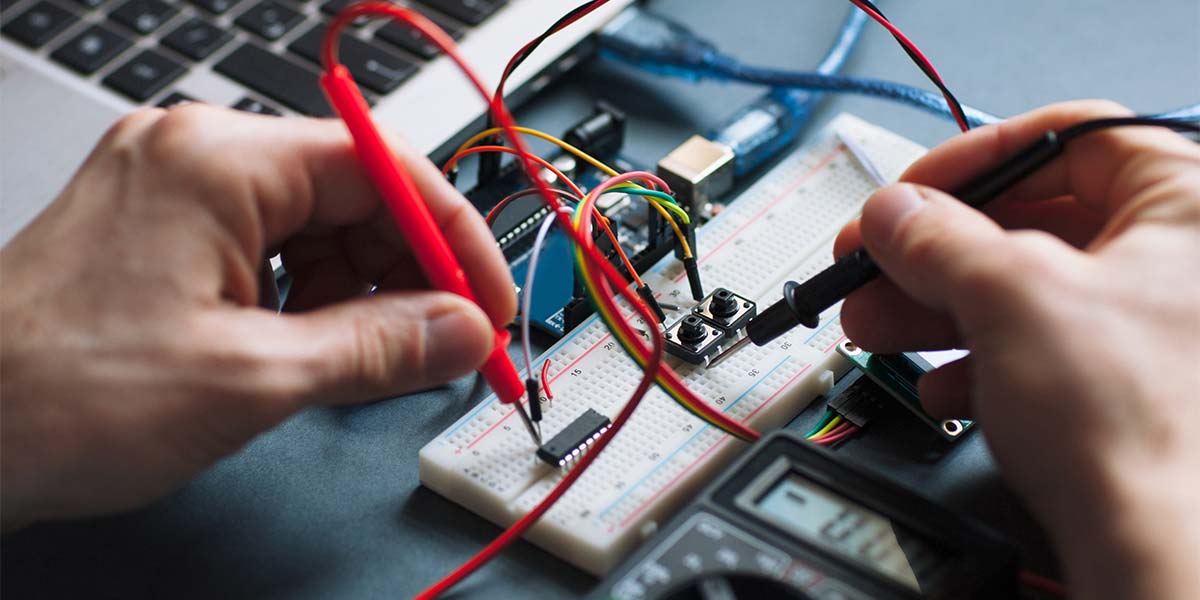
Behind every groundbreaking gadget lies a community of passionate individuals — engineers, designers, hobbyists — who push the boundaries of what’s possible. The global maker movement, fuelled by accessible microcontrollers like Arduino and Raspberry Pi, empowers anyone with curiosity and a soldering iron to build, tinker, and prototype.
This democratisation of electronics education inspires the next generation to solve problems creatively, whether by automating a garden irrigation system or designing a drone from scratch.
Challenges and Responsibilities in an Electrified World
While electronics bring untold benefits, they also pose unique challenges that demand thoughtful stewardship.
-
E-Waste: Rapid product cycles and planned obsolescence contribute to mountains of discarded gadgets, many of which contain hazardous materials.
-
Energy Consumption: Billions of connected devices draw power around the clock, increasing the need for renewable energy and energy-efficient design.
-
Privacy and Security: Smart electronics often collect sensitive data, making robust cybersecurity and transparent data practices non-negotiable.
Balancing innovation with responsibility will define how electronics shape the coming decades.
Conclusion: The Future Runs on Electronics
From the flicker of the first vacuum tube to the trillions of transistors humming in our smartphones today, electronics have never stopped transforming the human experience. They are the quiet workhorses behind our greatest conveniences, breakthroughs, and comforts.
As we step into a future of artificial intelligence, quantum computing, and ubiquitous connectivity, the promise of electronics continues to expand. With thoughtful design, ethical innovation, and a commitment to sustainability, this invisible force will keep powering progress — reminding us that sometimes, the smallest circuits spark the grandest revolutions.
