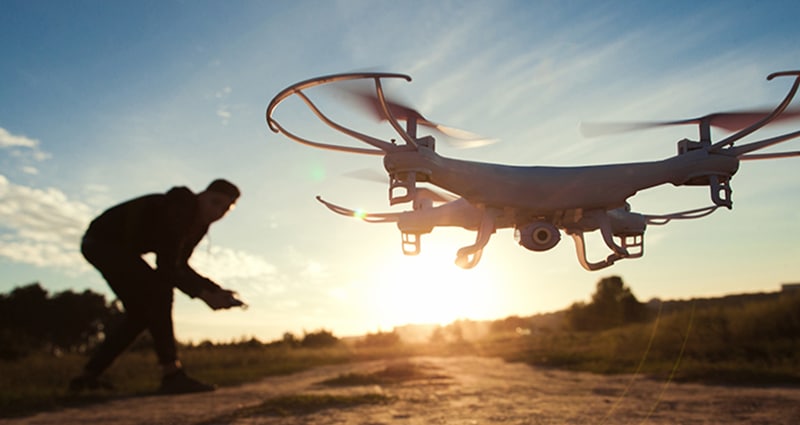
The skies may look calm, but just beneath the surface lies a growing concern. As drones become more accessible, near-miss incidents involving uncrewed aerial systems and human-crewed aircraft are on the rise, and the risks are real. Sonoran Desert Institute (SDI), accredited by the Distance Education Accrediting Commission (DEAC), addresses this challenge through dedicated training and online coursework, including an FAA Part 107 Exam Prep course, that equips students with the knowledge to operate drones legally, responsibly and in full compliance with federal airspace regulations.
What was once the domain of hobbyists and photographers is now a vital part of agriculture, logistics, construction and emergency response. Drones bring speed, efficiency and access to hard-to-reach places. However, without proper training, certification or respect for shared airspace, they can also pose serious risks.
Near Misses Are No Longer Rare
Over the last several years, the Federal Aviation Administration (FAA) and aviation watchdog groups have documented hundreds of near misses between drones and commercial or private aircraft. These close calls aren’t happening in obscure air corridors, but are occurring near airports, city centers and regulated, no-fly zones.
Even a small drone colliding with a passenger plane can cause serious damage. Jet engines are not built to ingest metal and lithium batteries at 30,000 feet. Rotor blades are vulnerable, and cockpits can be compromised if hit by debris. In most cases, pilots report spotting drones within 100 to 200 feet of their aircraft, a margin far too close for comfort.
While many incidents involve recreational users, the growing presence of drones in commercial industries means more operators are navigating shared airspace. That makes education, clear regulations and consistent industry standards more important than ever.
The Problem Isn’t the Technology, It’s the Training
Drones themselves are not dangerous. In fact, their automation, sensors and GPS systems make them highly controlled, when used properly. The issue lies in the gap between drone capability and operator understanding. Anyone with a credit card can buy a drone capable of flying thousands of feet in altitude, and miles in range. But not everyone takes the time to learn FAA regulations, understand restricted zones or register their aircraft. Even fewer complete the Part 107 certification, required for commercial use.
This lack of structure creates confusion, and risk. Untrained drone operators may not realize they’re near a hospital helipad, a wildfire response zone or a flight path. The result is unintentional, but potentially catastrophic. SDI integrates safety, airspace awareness and federal regulation into its FAA Part 107 Exam Prep course, ensuring that aspiring drone operators are prepared to meet national standards for commercial flight. Institutions emphasize that technical skills aren’t enough on their own. Safe and responsible operation needs to be taught, right alongside mechanics and flight theory.
Why This Needs a National Focus
As drones become essential to daily infrastructure, inspecting bridges, delivering packages, mapping land and supporting emergency crews, the stakes are rising. Public airspace is a shared resource. Just as we don’t let unlicensed drivers operate vehicles on highways, we cannot allow untrained operators to fly in zones that affect aviation and public safety.
A national strategy around drone safety is needed, one that includes education, accountability and stronger consequences for negligence. It includes:
- Mandatory certification for all drone operators, beyond basic hobby use
- Stricter enforcement of restricted zones, especially around airports, stadiums and emergency scenes
- Real-time airspace alerts, integrated into apps and control systems
- Greater public awareness of what is legal, and what is not
Accredited programs, such as the FAA Part 107 course, provide operators with essential training in legal and safe flight practices. Still, a wider national initiative is necessary to educate recreational and untrained users, who operate outside formal training systems.
The Role of Industry in Setting the Standard
Drone manufacturers also have a role to play. As technology advances, safety protocols must be built in. It includes no-fly zone databases, altitude limiters and alerts for approaching aircraft. Many drones already include geofencing, features that prevent flights near airports. Expanding and updating these systems can prevent accidents, before they start.
Companies using drones commercially must also invest in certified training, like FAA Part 107 preparation. Hiring uncertified pilots not only risks FAA penalties but also endangers lives and property. The safest organizations require Part 107 licenses, provide hands-on training and track pilot logs for quality assurance. Industry-wide cooperation can be necessary as commercial drone use expands into urban delivery routes, automated inspections and more complex airspace applications.
Public Trust Depends on Responsibility
For the drone industry to grow, the public must trust that the skies are safe. Near misses with planes or worse, accidents, damage that trust. Every incident leads to increased scrutiny, tighter restrictions and a harder climb for responsible operators trying to work legally.
That’s why education is the most powerful tool. When drone pilots understand the consequences, when they’re trained to make good decisions and respect airspace rules, the skies become safer for everyone.
Schools, businesses and policymakers must continue to raise standards for drone operators. Certification should not be optional, and safety should not be assumed; it must be demonstrated.
The Cost of Complacency
Waiting for a major incident is not an option. All it takes is one collision to change the narrative from innovation to tragedy. A midair impact could shut down drone programs, spark new legislation or lead to public backlash that stalls growth for years.
The emphasis should be on prevention. Training institutions need strong support, operators must be held to clear standards, and all users, whether hobbyists or contractors, must fully understand the responsibilities that come with flying.
A Safer Future Is Possible
The good news is that the path forward is clear. The tools, training and technology already exist. What is needed is greater adoption, stronger coordination and a shared commitment to keeping airspace safe. Drone safety starts with proper training. At institutions like SDI, students are taught to operate drones professionally and in accordance with FAA regulations, with a focus on risk management, regulatory compliance and situational awareness. That approach benefits students, employers and everyone who shares the sky.
With leadership from educators, cooperation from the private sector and support from regulators, drone safety can be maintained, even as the skies grow more crowded. The future of drone technology is full of promise. From helping farmers monitor crops to supporting disaster relief teams, drones are improving how we work, build and respond. But that future depends on keeping the skies safe.
Education is the first step. Responsibility is the next step. Together, they can ensure that drones enhance daily life, without endangering it. A national conversation on drone safety is timely, and necessary. Silence in the skies should never mean someone isn’t watching where they are flying.
